From the Field: Five Career Strategies That Transformed the Trajectories of Diverse STEM Professionals

The gap between career advice and career reality can feel enormous, especially for scientists from historically underrepresented communities. Generic guidance — "network aggressively," "find a mentor," "publish early and often" — rarely accounts for the specific dynamics that first-generation scientists, scientists of color, and other marginalized researchers encounter on their way up. We gathered insights from SACNAS members at various career stages to surface the strategies that actually moved the needle. These are not aspirational suggestions. They are field-tested approaches from scientists who have navigated real barriers and come out the other side with hard-won wisdom to share.
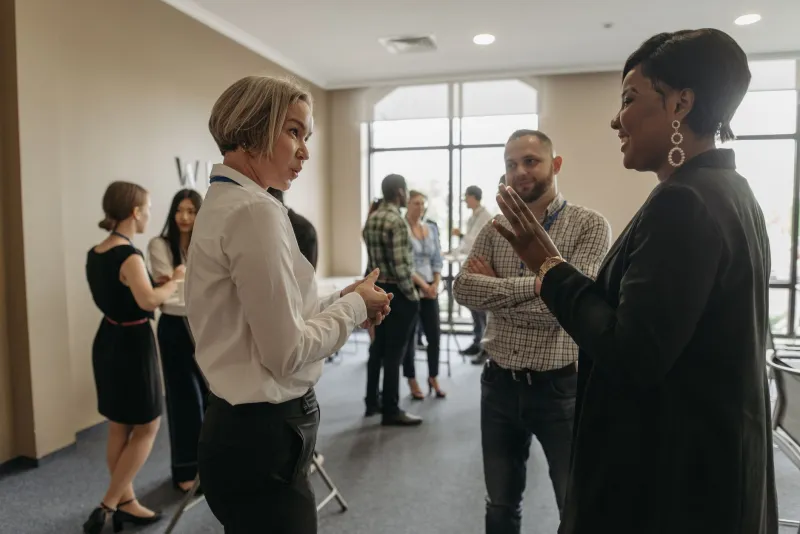
1. Treat Conferences as Career Infrastructure, Not Optional Extras
For many early-career scientists, conference attendance feels like a reward to be earned after publishing a certain number of papers or reaching a particular career milestone. Dr. Alejandro Ríos, a marine ecologist who presented his first poster at a SACNAS National Conference as a master's student, describes this framing as one of the most limiting beliefs he eventually had to unlearn.
"I thought I needed to have something impressive to show before I could justify being in the room," he says. "What I didn't understand was that the room itself was where the opportunities were being created."
His advice is specific: attend conferences with a defined set of objectives rather than a vague intention to "network." Identify three to five researchers whose work intersects with yours and reach out before the event to request brief meetings. Prepare a two-minute summary of your research that is accessible to scientists outside your subfield. Follow up within 48 hours of any substantive conversation.
Actionable takeaway: Before your next conference, draft a short list of target connections and a specific ask for each — whether that is feedback on your research, an introduction to a funding program officer, or a conversation about postdoctoral opportunities. Purposeful presence is more productive than passive attendance.
2. Build a Mentorship Network, Not Just a Mentor Relationship
The singular mentor — the wise senior scientist who shepherds a young researcher through every career challenge — is more mythology than reality for most scientists, and particularly for those from underrepresented backgrounds who may find few role models at senior levels within their institutions. Dr. Priya Nair, a biomedical engineer and NSF Graduate Research Fellow, describes the shift in her thinking as transformative.
"I spent two years waiting for one perfect mentor to appear," she recalls. "When I finally started building what I now call a 'mentorship portfolio,' everything changed. I had different people for different needs — one for technical guidance, one for navigating institutional politics, one who understood what it meant to be a first-generation student in a research university."
Research supports this distributed approach. A 2015 study published in Academy of Management Journal found that professionals with diverse mentor networks — including peers, near-peers, and senior advisors — reported higher career satisfaction and advancement rates than those relying on a single primary mentor.
Actionable takeaway: Audit your current support network. Identify gaps — are you missing someone who understands funding mechanisms? Someone who has successfully navigated the transition from academia to industry? Actively seek those specific relationships rather than waiting for them to form organically.
3. Leverage Funding Opportunities Designed for Underrepresented Researchers
Federal agencies, private foundations, and professional societies have created a significant — though underutilized — landscape of funding opportunities specifically targeting scientists from historically marginalized communities. Many early-career researchers from these groups remain unaware of the full scope of available resources, or assume the competition is too fierce to make applying worthwhile.
Dr. Marcus Webb, a computational neuroscientist, credits his awareness of targeted funding to a workshop he attended at a SACNAS conference. "I had no idea the Ford Foundation Predoctoral Fellowship existed until someone mentioned it in a session," he says. "I applied, I was awarded it, and it fundamentally changed my graduate school experience — I had independence and resources I wouldn't have had otherwise."
Beyond the Ford Foundation, relevant programs include the NSF Graduate Research Fellowship Program, the NIH Maximizing Opportunities for Scientific and Academic Independent Careers (MOSAIC) program for postdoctoral researchers, and numerous society-specific awards within professional organizations.
Actionable takeaway: Dedicate one hour this week to researching funding opportunities relevant to your career stage and identity. Create a calendar of application deadlines for the next 12 months. Many of these applications require institutional support — identify the relevant offices at your institution early.
4. Develop Visibility Through Strategic Communication
Scientific communication is increasingly recognized not as peripheral to research careers but as central to them. For scientists from underrepresented communities, developing a visible professional presence — through writing, speaking, and public engagement — can create opportunities that traditional academic channels do not always provide equitably.
Dr. Sofia Castellanos, an atmospheric scientist, began writing accessible summaries of her research for a bilingual science blog during her doctoral program. Within two years, she had been invited to speak at a regional science policy forum, connected with a program officer at NOAA, and been asked to contribute to a National Geographic feature on climate change in Latino communities.
"I wasn't trying to become a science communicator," she says. "I was trying to make my work legible to my own community. The professional benefits were a side effect of doing something I believed in."
Actionable takeaway: Identify one platform — a departmental blog, a professional association newsletter, a public lecture series — where you can begin sharing your work in accessible language. Consistency matters more than volume. Monthly contributions over a year will generate more visibility than sporadic bursts of activity.
5. Claim Leadership Roles Before You Feel Ready
Imposter syndrome — the persistent internal experience of being unqualified despite external evidence of competence — disproportionately affects scientists from underrepresented groups, and it can manifest as an extended reluctance to pursue leadership opportunities. Multiple researchers we spoke with identified the decision to step into leadership roles earlier than felt comfortable as among the most consequential choices of their careers.
Dr. James Okafor, a biochemist who now directs a research center at a major R1 university, served as a SACNAS chapter president as a second-year doctoral student. "It terrified me," he admits. "I was convinced someone was going to figure out that I didn't know what I was doing. What actually happened was that I built organizational skills, expanded my network by about 200 people, and developed a track record of leadership that I could point to on every subsequent application."
Leadership experience in professional organizations, student associations, and conference planning committees provides demonstrable evidence of capacity that supplements publication records and grant histories — particularly important for scientists whose research may be in early stages.
Actionable takeaway: Identify one leadership opportunity within reach — a committee chair position, a session organizer role at a regional conference, or a student chapter officer position. Apply within the next 30 days. The discomfort of stretching into leadership is temporary. The professional development is permanent.